29‏/03‏/2010

Book: Wisdom


Although I don't generally like or recommend this kind of books, the link between this ultimate philosophical aspiration, wisdom, and the structure of the brain is of major importance to NeoBedouinism, and its effort to unite traditional historic "spiritual" achievements and the modern "scientific" understanding.

In the 1970s, psychologists began the formal study of wisdom as a subject worthy of research. These social scientists identified a number of common psychological and behavioral characteristics associated with wisdom, including compassion, emotion regulation, a sense of social justice, moral reasoning, patience, and an ability to deal with uncertainty and change.

In Wisdom: From Philosophy to Neuroscience, Stephen S. Hall examines the way recent brain science is shedding light on these timeless human virtues. He refers to them as eight “neural pillars of wisdom.” Among the findings in each area are:

1. Emotion Regulation – Studies at Stanford University, including brain imaging experiments, have shown that older people process emotion differently than younger people on average. They are less likely to dwell on the negative, tend to value relationships more, and rebound from setbacks more quickly.

2. Compassion – Electrophysiological measurements of the brains of Buddhist monks in the midst of compassion meditation have identified a unique pattern of brain activation, known as a “gamma oscillation,” which may coordinate and synchronize mental activity in disparate parts of the brain during empathic understanding and acts of loving-kindness.

3. Moral Judgment – Cognitive neuroscientists, in a series of brain scanning experiments over the past decade, have identified a neural circuit involved in moral reasoning, and have shown that moral judgment can change depending on whether we are physically close to another person (“up close and personal” judgments) or are acting at a distance.

4. Humility – Business psychologists have shown that the combination of intense professional will and extreme personal humility are the essential traits in turning a good company into a great company; by contrast, CEOs who rank high in narcissism measures tend to be leaders—but bad ones. They put personal drama and egotism ahead of company performance.

5. Altruism – Scientists have used brain-scanning experiments to identify a tentative circuitry in the brain that monitors situations of social injustice, and seems to prompt a form of behavior known as altruistic punishment—decisions in which a person sacrifices personal gain to punish a rule-breaker.

6. Patience – A sense of imagination about the future, a capacity which resides in the brain’s prefrontal cortex, helps suppress the impulse for immediate gratification, according to brain scanning experiments, and helps people plan goals and remain optimistic about the future.

7. Sound Judgment – Building on a huge amount of neuroscience that has been investigating decision-making, scientists are now teasing apart the process of neural valuation—how the brain attaches value to various choices. This may turn out to be the neural answer to a question asked by philosophers for centuries about the central challenge of wisdom: how do we decide what is most important?

8. Dealing with Uncertainty – Scientists at Princeton University, UCLA and elsewhere have been investigating how the brain reacts when it encounters the unexpected. Animal experiments suggest that habit allows us to react more quickly when the world is unchanging, but that in an environment of great flux, habit slows down our neural ability to adapt to changing circumstances

21‏/03‏/2010

EM Education 106-Dubstep/Ikonika


Ikonika, a female producer that has hitched herself to the right star in signing to the Hyperdub label, a dubstep collective that (much like its founder, Kode9) has found a new lease of life outside the main genre arena.

Dubstep is a genre of electronic dance music that has its roots in London's early 2000s UK garage scene. Musically, dubstep is distinguished by its 2-step rhythm, or use of snare sounds similar to 2-step garage and grime, and an emphasis on bass, often producing "dark" sounds, but just as frequently producing sounds reminiscent of dub reggae or funky US garage. Dubstep tracks are generally produced at a tempo of around 140 beats per minute and in recent years have developed signature half time rhythms, often heavily shuffled or syncopated, and usually, though not exclusively, including only one snare drum hit per bar, often on the third beat. Such factors make dubstep rhythms markedly different from four-to-the-floor rhythms used in other styles of electronic dance music such as house music, which usually have two snare hits accompanying the second and fourth kick drum. Often, the sense of rhythm in dubstep is propelled more by the bassline than by the percussive content.

The earliest dubstep releases, which date back to 1999, were darker, more experimental, instrumental dub remixes of 2-step garage tracks attempting to incorporate the funky elements of breakbeat, or the dark elements of drum and bass into 2-step, which featured as B-sides of single releases. In 2001, this and other strains of dark garage music began to be showcased and promoted at London's club night Forward, which went on to be considerably influential to the development of dubstep. The term "dubstep" in reference to a genre of music began to be used by around 2002, by which time stylistic trends used in creating these remixes started to become more noticeable and distinct from 2-step and grime.

A very early supporter of the sound was BBC Radio 1 DJ John Peel, who started playing it from 2003 onwards. In 2004, the last year of his show, he put Distance, Digital Mystikz and Plastikman in his top 50 for the year. Dubstep started to spread beyond small local scenes in late 2005 and early 2006; many websites devoted to the genre appeared on the internet and thus aided the growth of the scene, such as dubstepforum, the download site Barefiles and blogs such as gutterbreakz. Simultaneously, the genre was receiving extensive coverage in music magazines such as The Wire and online publications such as Pitchfork Media, with a regular feature entitled The Month In: Grime/Dubstep. Interest in dubstep grew significantly after BBC Radio 1 DJ Mary Anne Hobbs started championing the genre, beginning with a show devoted to it (entitled "Dubstep Warz") in January 2006.


19‏/03‏/2010

Come


Come, come, whoever you are.

Wonderer, worshipper, lover of leaving.

It doesn't matter.

Ours is not a caravan of despair.

Come, even if you have broken your vow

a thousand times

Come, yet again, come, come.

Rumi


16‏/03‏/2010

EM Education 105/B-Frankie knuckles


Frankie Knuckles (born January 18, 1955, New York) is an American DJ, record producer and remix artist. He played an important role in developing house music (an electronic, disco-influenced dance music) as a Chicago DJ in the 1980s and he helped to popularize house music in the 1990s, with his work as a producer and remixer. In 2005, Knuckles was inducted into the Dance Music Hall of Fame for his achievements as a DJ.

1970s-1980s

While studying textile design at FIT in Manhattan, Knuckles began working as a DJ, playing soul, disco and R&B at The Continental Baths with fellow DJ Larry Levan. When he became better known, he DJed at the club Better Days. When the Warehouse club opened in Chicago in 1977, he was invited to play on a regular basis. He continued DJing there until 1982, when he started his own club, The Power Plant. Incidentally Frankie bought his first drum machine from a young Derrick May who regularly made the trip from Detroit to see Frankie at the Warehouse and fellow pioneer Ron Hardy at the Music Box.

Knuckles also had a musical partnership with Jamie Principle, and helped put 'Your Love' and 'Baby Wants to Ride' out on vinyl after these tunes had been regulars on his reel-to-reel player at the Warehouse for a year.

As house music gained momentum, pioneering producer Chip E. took Knuckles under his tutelage and produced Knuckle's first recording, "You Can't Hide", featuring vocalist Ricky Dillard. Then came more production work, including Jamie Principle's "Baby Wants to Ride", and later "Tears" with Robert Owens (of Fingers, Inc.) and (Knuckles' protege and future Def Mix associate) Satoshi Tomie.

When business difficulties caused the Warehouse to fold, he moved back to New York, and was the featured resident DJ at The World, and also had numerous subsequent residencies, including at The Choice club.

In New York, he immersed himself in producing, remixing and recording.

1990s-2000s

Knuckles did a number of popular Def Classic Mixes with John Poppo as sound engineer. Knuckles partnered with David Morales on Def Mix Productions, and both men's mixing styles became very similar for a period in the early 1990s as they honed the formula for a "Def Classic Mix" sound. With several important original productions and remixes to his name, by the early 1990s, Knuckles was becoming a well-known name in the increasingly popular house music genre.

In 1991 he released his biggest hit to date, "The Whistle Song" which bears a slight similarity to Van McCoy's "The Hustle" in its whistle-like refrain. The Def Classic Mix of "Change" by Lisa Stansfield done around this period also features the whistle like motif. Knuckles' debut album - Beyond the Mix, released on Virgin Records also contained "Rain Falls" and featured vocals from Lisa Michaelis. Key remixes from this time include his rework of the Electribe 101 anthem "Talking With Myself" and "Where Love Lives" by Alison Limerick.

As his productions and remixes were becoming more popular, and he was also breaking new ground. When Junior Vasquez took a sabbatical from Manhattan's The Sound Factory, he took over and launched a successful run as resident DJ until Vasquez made his return, at which point Knuckles became the resident DJ at The Sound Factory Bar. Knuckles remained part of the underground scene. In 1992, Billboard's Larry Flick commented "He's probably the best dance music producer we have in America. He understands the groove, but he understands songs, and the whole picture." Knuckles won the 1997 Grammy Award for Remixer of the Year, Non-Classical.

Knuckles continued to work as a remixer through the 90s and into the next decade, reworking tracks from Michael Jackson, Luther Vandross, Diana Ross, Eternal and Toni Braxton. He released several new singles, including "Keep On Movin'" and a re-issue of an earlier hit "Bac N Da Day" with Definity Records. In 2004, he released a thirteen track album of original material - his first in over a decade, entitled A New Reality, which was critically well received. In October 2004 "Your Love" appeared in the popular videogame Grand Theft Auto: San Andreas, playing on house music radio station, SF-UR. On 19 September 2005, Knuckles was inducted into the Dance Music Hall of Fame for his outstanding achievement as a DJ. Knuckles is featured in the 2006 documentary film, "The UnUsual Suspects - Once Upon a Time in House Music" by Chip E. and the 2005 documentary film, "Maestro" by Josell Ramos.

EM Education 105/A-The birth of House


House is a descendant of disco, which blended soul, R&B, funk, with celebratory messages about dancing, love, and sexuality, all underpinned with repetitive arrangements and a steady bass drum beat. Some disco songs incorporated sounds produced with synthesizers and drum machines, and some compositions were entirely electronic; examples include Giorgio Moroder late 1970s productions such as Donna Summer's hit single "I Feel Love" from 1977, and several early 1980s disco-pop productions by the Hi-NRG group Lime.

House was also influenced by mixing and editing techniques earlier explored by disco DJs, producers, and audio engineers like Walter Gibbons, Tom Moulton, Jim Burgess, Larry Levan, Ron Hardy, M & M and others who produced longer, more repetitive and percussive arrangements of existing disco recordings. Early house producers like Frankie Knuckles created similar compositions from scratch, using samplers, synthesizers, sequencers, and drum machines.

The hypnotic electronic dance song "On and On", produced in 1984 by Chicago DJ Jesse Saunders and co-written by Vince Lawrence, had elements that became staples of the early house sound, such as the 303 bass synthesizer and minimal vocals. It is sometimes cited as the 'first house record' although other examples from the same time period, such as J.M. Silk's "Music is the Key" (1985) have also been cited.


The origins of the term "house" are disputed. The term may have its origin from a Chicago nightclub called the The Warehouse which existed from 1977 to 1982. The Warehouse was patronized primarily by gay black and Latino men, who came to dance to disco music played by the club's resident DJ, Frankie Knuckles. Although Knuckles left the club in 1982 and it was renamed Music Box, the term "house", short for Warehouse, is said to have become popular among Chicagoans as being synonymous with Knuckles' musical selections as a DJ before becoming associated with his own dance music productions, even though those didn't begin until well after the closure of The Warehouse. In the Channel 4 documentary Pump Up The Volume, Knuckles remarks that the first time he heard the term "house music" was upon seeing "we play house music" on a sign in the window of a bar on Chicago's South Side. One of the people in the car with him joked, "you know, that's the kind of music you play down at the Warehouse!". South-Side Chicago DJ Leonard "Remix" Rroy, in self-published statements, claims he put such a sign in a tavern window because it was where he played music that one might find in one's home; in his case, it referred to his mother's soul ; disco records, which he worked into his sets.

Chip E.'s 1985 recording "It's House" may also have helped to define this new form of electronic music. However, Chip E. himself lends credence to the Knuckles association, claiming the name came from methods of labelling records at the Importes Etc. record store, where he worked in the early 1980s: bins of music that DJ Knuckles played at the Warehouse nightclub was labelled in the store "As Heard At The Warehouse", which was shortened to simply "House". Patrons later asked for new music for the bins, which Chip E. implies was a demand the shop tried to meet by stocking newer local club hits.

Larry Heard, aka "Mr. Fingers", claims that the term "house" reflected the fact that many early DJs created music in their own homes, using synthesizers and drum machines, including the Roland TR-808, TR-909, and the TB 303 Bassline synthesizer-sequencer. These synthesizers were used to create a house subgenre called acid house.

Juan Atkins, an originator of Detroit techno music, claims the term "house" reflected the exclusive association of particular tracks with particular DJs; those tracks were their "house" records (much like a restaurant might have a "house" salad dressing).


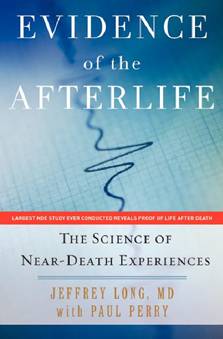
"EVIDENCE OF THE AFTERLIFE"


EVIDENCE OF THE AFTERLIFE: The Science of Near-Death Experiences by Jeffrey Long, M. D. with Paul Perry (New York: HarperOne, 2010).

EVIDENCE OF THE AFTERLIFE is a break-through book in the area of afterlife research in general and near-death studies in particular. Not only is Jeffrey Long a careful scholar, but he and Jody Long have amassed the largest collection of near-death experiences (NDEs) ever. Their collection also includes the largest group of non-English-speaking NDEs ever.

The Nine Lines of Evidence from Evidence of the Afterlife: The Science of Near-Death Experiences:
1. Crystal-Clear Consciousness. The level of consciousness and alertness during near-death experiences (NDEs) is usually even greater than that experienced in everyday life even though NDEs generally occur when a person is unconscious or clinically dead. This high level of consciousness while physically unconscious is medically inexplicable. Additionally, the elements in NDEs generally follow the same consistent and logical order in all age groups and around the world, which refutes the possibility that NDEs have any relation to dreams or hallucinations.

2. Realistic Out-of-Body Experiences. Out-of-body experiences (OBEs) are one of the most common elements of NDEs. What NDErs see and hear of earthly events in the out-of-body state is almost always realistic. When the NDEr or others later seek to verify what was observed or heard during the NDE, the OBE observations are almost always confirmed as completely accurate. Even if the OBE observations during the NDE included events far from the physical body, and far from any possible sensory awareness of the NDEr, the OBE observations are still almost always confirmed as completely accurate. This fact alone rules out the possibility that near-death experiences are related to any known brain functioning or sensory awareness. This also refutes the possibility that NDEs are unrealistic fragments of memory from the brain.

3. Heightened Senses. Not only are heightened senses reported by most who have experienced NDEs, normal or supernormal vision has occurred in those with significantly impaired vision, and even legal blindness. Several people who have been totally blind since birth have reported highly visual near-death experiences. This is medically inexplicable.

4. Consciousness During Anesthesia. Many NDEs occur while under general anesthesia- at a time when any conscious experience should be impossible. While some skeptics claim that these NDEs may be the result of too little anesthesia, this ignores the fact that some NDEs result from anesthesia overdose. Additionally, the description of a NDE differs greatly from that of one who experiences “anesthetic awareness.” The content of NDEs that occur under general anesthesia is essentially indistinguishable from NDEs that did not occur under general anesthesia. This is further strong evidence that NDEs are occurring completely independently from the functioning of the physical brain.

5. Perfect Playback. Life reviews in near-death experiences include real events that previously took place in the lives of those having the experience, even if the events were forgotten or happened before they were old enough to remember.

6. Family Reunions. During a NDE, the people encountered are virtually always deceased, and are usually relatives of the person having the experience- sometimes they are even relatives who died before the NDEr was born. Were the NDE only a product of memory fragments, they would almost certainly include far more living people, including those with whom they had more recently interacted.

7. Children’s Experiences. The near-death experiences of children, including very young children who are too young to have developed concepts of death, religion, or near-death experiences, are essentially identical to those of older children and adults. This refutes the possibility that the content of NDEs is produced by preexisting beliefs or cultural conditioning.

8. Worldwide Consistency. Near-death experiences appear remarkably consistent around the world, and across many different religions and cultures. NDEs from non-Western countries are incredibly similar to those that occur in people in Western countries.

9. Aftereffects. It is common for people to experience major life changes after having near-death experiences. These aftereffects are often powerful, lasting, life-enhancing, and the changes generally follow a consistent pattern. As the NDErs themselves almost always believe- near-death experiences are, in a word, real.


14‏/03‏/2010

الجنس الموشيكي وصحن الحمّص


يستضيف متحف "Quai Branly" الباريسي معرضا لتحف فنية من حضارة ال"موشيكا" التي عاشت في شمال البيرو بين القرن الثاني والقرن الثامن الميلادي. والمثير للاهتمام في هذه التحف أن عددا كبيرا منها هو عبارة عن تماثيل صغيرة تجسد وضعيات جنسية لشخصين، احدهما حيّ والآخر ينتمي إلى "العالم الآخر".

ومعظم المنحوتات ال"موشيكية" هذه تجمع رجالا ميتين-أحياء (Zombies)، بنساء يحملن تعابير عدم الاهتمام أو حتى القرف والغضب، في وضعيات جنسية يتضح منها ان الفعل الجنسي المصوّر لا يهدف لا إلى المتعة ولا إلى الانجاب.

هذه الممارسة الجنسية، تشكل رمزية للقاء بين عالم الأحياء وعالم الاموات الذين لا يكترثون لا بالمتعة ولا بالانجاب، بل يستخدمون الجنس للاخضاع وتأكيد مكانتهم الاجتماعية فحسب.

اجمل هذه المنحوتات، عبارة عن صحن مجوف، في داخله رجل ميت-حي، يتمسك برجلي امرأة تحاول الإفلات منه عبر "الصحن".

أنا أرجّح ان يكون ال"Zombies" الموشيكيون، انتقلوا إلى منطقتنا بعد اندثار حضارتهم، لممارسة جنس الموتى مع النساء الأحياء. عسى أن تتمكن المرأة العربية من الإفلات خارج جدران صحن الحمّص.


12‏/03‏/2010

EM Education 104-Synthesizers/Moog


EM is all about sounds, electronically generated sounds. So how do we generate this infinity of different sounds you could hear in multiple genres of music from pop to HardTek? Answer: Synthesizers.

Synthesizers generate sound through various analogue and digital techniques. Early synthesizers were analog hardware based but many modern synthesizers use a combination of DSP software and hardware or else are purely software-based (see softsynth). Digital synthesizers often emulate classic analog designs. Sound is controllable by the operator by means of circuits or virtual stages which may include:

Electronic oscillators - create raw sounds with a timbre that depends upon the waveform generated. Voltage controlled oscillators and digital oscillators may be used. Additive synthesis models sounds directly from pure sine waves, somewhat in the manner of an organ, while Frequency modulation and Phase distortion synthesis use one oscillator to modulate another. Subtractive synthesis depends upon filtering a harmonically-rich oscillator waveform. Sample-based and Granular synthesis use one or more digitally-recorded sounds in place of an oscillator.

ADSR envelopes - provide envelope modulation to "shape" the produced note in the time domain. These are used in most forms of synthesis.

Filters - "shape" the sound generated by the oscillators in the frequency domain, often under the control of an envelope or LFO. These are essential to subtractive synthesis.

LFO - an oscillator of adjustable frequency that can be used to modulate the sound rhythmically, for example to create tremolo or vibrato or to control a filter's operating frequency. LFOs are used in most form of synthesis.

Other sound processing effects such as ring modulators may be encountered.

We will get back in further posts to everyone of these parameters of sound generation. But for the moment, check out the video above where the inventor of the Moog synthesizer, that gave us so many familiar sounds, explains the history of his invention. Any self-respecting EMusician or EM fan or any contemp. music afficiando, should know a little at least about the legendary Moog. And the big plus in this video, is the Theremin, this amazing russian invention from the 1920's where you can play music by moving your hands around two antennas. Check the video until the end and you will see an amazing talent playing the Theremin.


مستقبل؟


الساعة 2:30 بعد نصف الليل. صديقتي الكلبة نائمة وأنا أعجز عن السبات. منذ يومين أدخلت التلفزيون إلى بيتي للمرة الأوى منذ 8 سنوات تقريبا. أقلب وأقلب حتى سقطت أذني على كلمة طرابلس...ورغم نفوري من القناة التي صدرت عنها الكلمة المقدسة، قررت أن اتوقف عن القفز بين القنوات، لأرى ما يقال عن مدينتي.

مقابلات في الشارع تحت عنوان: هذه المنطقة التي لم تتأخر عن احتفالات 14 آذار....بدأ الانزعاج: بماذا تقحموننا؟...ثم بدأ أناس، أولهم ملتح، يعلنون انتماء مدينتنا المزعوم إلى تيار سياسي...كبر الانزعاج، انطلق هذا الغثيان الذي يصيبني كلما أحسست بالتجارة. غثيان يبدأ من الرأس لا من المعدة. أشكالهم لا تشبه المدينة. حتى عندما كتمت الصوت وتناسيت ما يقولون، كان في وجوههم أشياء لا تنتمي إلى المدينة، طرابلس.

ثم بداوا يتكلمون عن دولة المؤسسات، وبدأ الكريشندو يتضح. ينطلق الكلام إلى السلاح، المقاومة، حسن نصر الله...وكلما تعمق الاغتصاب الإعلامي لطرابلس، كلما تقوقعت تحت لحافي واقتربت وضعيتي من وضعية الجنين في رحم أمه...وأغلق نفسي على نفسي، إنهم يستبيحون عرضي على شاشة التلفزيون. إلى أن.....

إلى أن برز أحد أباطرة الفكر السياسي والانتماء المتجذر: هنّي بدن حرب مع اسرائيل!...قالها وكأنها اتهام!! ماذا تريد إذن يا.....؟أجاب ولم يوفر: نحنا ما بدنا حرب مع اسرائيل...نحنا بدنا سلام...

هنا انتهى الاغلاق على النفس، وقفز اللحاف 3 أمتار ليغطي صديقتي الكلبة...شتمت قبل أن أكتب فلن أشتم كتابة...لكن  قناة "المستقبل" وما أقبحه من مستقبل تريده لنا هذه القناة، تحمل مسؤولية رهيبة تجاه طرابلس، تجاهي أنا!!! كيف يسمح القانون بذلك؟؟ من اعطاهم الحق في أخذ كاميرا وانتقاء أتباعهم في المدينة ليضعون على لسان طرابلس ما لا تطيق طعمه!

ارادة الحرب المستمرة مع الكيان الصهيوني وسام على صدر طرابلس، وتحتفل يوميا في أحياء لم تدخلها ولن تدخلها كاميرا "المستقبل"، بكل شهيد قاتل أعداء الأمة، مهما كانت الأمة، في فلسطين والعراق وكافة أنحاء العالم. لسنين مضت كانت هذه القناة نفسها تروج لصورة ملتحية للمدينة، تروج لها "قلعة للسنة" ووكرا للسلفية، فأدخلونا في الصورة لا بالحقيقة، إلى موقع طائفي بشع..والآن يريدون أن يعروننا من هويتنا وثوابتنا ونحن نتفرج...

طرابلس تقفز فوق لبنانكم كله إلى أرض فلسطين، بخطوة واحدة...لا تمر في اسمائكم ولا أحزابكم ولا مؤسساتكم التي أبقت طرابلس جائعة طول وجودكم هنا، لكي تتملكوا كلمتها وتستولوا على عقلها وقلبها..وفشلتم، وستقشلون. طرابلس لفلسطين وفلسطين لنا..وأنتم لا أحد.

ملاحظة: استضافت قناة "المستقبل المظلم" """شاعرا""" قال بعدما أعلن نفسه "مدمرا نفسيا" أنه يسمي Catherine Deneuve: كاترين de dix neuVVVV.

وكما قال لي البواب أبو محمد بصدق عندما دست وأنا في العاشرة من عمري في مستنقع مجارير متفجرة: "هذا خرى!"...صدقت يا أبا محمد...

11‏/03‏/2010

خطورة فخ الخوف...فخفّف


الهند خائفة من باكستان، وباكستان خائفة من افغانستان، وافغانستان خائفة من طالبان، وطالبان خائفة من أميركا، وأميركا خائفة من طالبان وباكستان وايران، وايران خائفة من باكستان واسرائيل، واسرائيل بالطبع خائفة من الجميع إلا من أميركا.

العراق خائف من سوريا، وسوريا خائفة من ايران، وايران خائفة من السعودية، والسعودية خائفة من القاعدة، والقاعدة خائفة من أميركا، وأميركا خائفة من القاعدة وسوريا وايران ولبنان، ولبنان خائف من سوريا واسرائيل، واسرائيل بالطبع خائفة من الجميع إلا من اميركا.

فتح خائفة من حماس، وحماس خائفة من مصر، ومصر خائفة من اميركا واسرائيل، واسرائيل بالطبع خائفة من الجميع إلا من أميركا.

الحريري خائف من حزب الله، وحزب الله خائف من العملاء، والعملاء خائفون من اسرائيل، واسرائيل بالطبع خائفة من الجميع إلا من أميركا.

أنا لا أخاف من الهند لأن موسيقاها جميلة، ولا أخاف من باكستان لأن نساءها أجمل، ولا أخاف من افغانستان لأن فيها مدينة بلخ، ولا أخاف من طالبان لأنهم ردة فعل، ولا أخاف من ايران لأنني اعرف مزاجيتها التاريخية، ولا أخاف من العراق لأن فيه شارع الرشيد وشعراء البصرة، ولا أخاف من السعودية لأن جزيرة العرب للعرب، ولا أخاف من القاعدة لأنها موجودة في ملفات ال"سي آي ايه" فقط، ولا أخاف من سوريا لأنني لا استطيع الخوف من ظلّي وما أقرب، ولا أخاف الفلسطينيين لأنهم أصحاب حق هو حقي، ولا أخاف مصر لأن ام كلثوم وعبد الباسط عبد الصمد وجدا، ولا أخاف الحريري لأن المال لا يغريني، ولا أخاف حزب الله لأنني لهم وساطة مع الله، ولا أخاف اسرائيل لأنني اعرف أرضي وتعرفني، ولا أخاف من أميركا لأن الشيطان سبقني اليها.

"تعا كلّك تمرة بالخيمة عيوني...."


10‏/03‏/2010

EM Education 103/B: Raymond Scott


Raymond Scott (born Harry Warnow, 10 September 1908 — 8 February 1994), was an American composer, band leader, pianist, engineer, recording studio maverick, and electronic instrument inventor. He was born in Brooklyn to a family of Russian-Jewish immigrants. His older brother, Mark Warnow, a conductor, violinist, and musical director for the CBS radio program Your Hit Parade, encouraged his musical career. Though Scott never scored cartoon soundtracks, his music is familiar to millions because of its adaptation by Carl Stalling in over 120 classic Bugs Bunny, Porky Pig, Daffy Duck and other Warner Bros. Looney Tunes and Merrie Melodies animated features. Scott's melodies have also been heard in twelve Ren & Stimpy episodes (which used the original Scott recordings), while making cameos in The Simpsons, Duckman, Animaniacs, The Oblongs, and Batfink. The only music Scott actually composed to accompany animation were three 20-second electronic commercial jingles for County Fair Bread in 1962.

Scott, who attended Brooklyn Technical High School, was an early electronic music pioneer and adventurous sound engineer. During the 1930s and 1940s, many of his band's recording sessions found the bandleader in the control room, monitoring and adjusting the acoustics, often by revolutionary means. As Gert-Jan Blom & Jeff Winner would write, "Scott sought to master all aspects of sound capture and manipulation. His special interest in the technical aspects of recording, combined with the state-of-the-art facilities at his disposal, provided him with enormous hands-on experience as an engineer."

In 1946, Scott established Manhattan Research, a division of Raymond Scott Enterprises, Incorporated, which he announced would "design and manufacture electronic music devices and systems." As well as designing audio devices for his own personal use, Manhattan Research Inc. provided customers with sales & service for a variety of devices "for the creation of electronic music and musique concrete" including components such as ring modulators, wave, tone and envelope shapers, modulators and filters. Of unique interest were instruments like the "Keyboard theremin", "Chromatic electronic drum generators", and "Circle generators". Scott would often describe Manhattan Research Inc. as "More than a think factory - a dream center where the excitement of tomorrow is made available today. Bob Moog, developer of the Moog Synthesizer, met Scott in the 1950s, designed circuits for him in the 1960s, and acknowledged him as an important influence.

Relying on several instruments of his own invention, such as the Clavivox and Electronium, Scott recorded futuristic electronic compositions for use in television and radio commercials as well as records of entirely electronic music. A series of three albums designed to lull infants to sleep, Scott's groundbreaking work Soothing Sounds for Baby was released in 1964 in collaboration with the Gesell Institute of Child Development. The music, which today sounds uncannily similar to the ambient work of Tangerine Dream or Brian Eno from the mid 1970s, did not find much favor with the record-buying public of the day.Still, "Manhattan Research, Inc." had considerable success in providing striking, ear-catching sonic textures for broadcast commercials.

Scott developed some of the first devices capable of producing a series of electronic tones automatically in sequence. He later credited himself as being the inventor of the polyphonic sequencer. (It should be noted that his electromechanical devices, some with motors moving photocells past lights, bore little resemblance to the all-electronic sequencers of the late sixties.) He began working on a machine which would compose using artificial intelligence. The Electronium, as Scott would eventually dub it, with its vast array of knobs, buttons and patch panels is "considered to be the first-ever self-composing synthesizer".Some of Raymond Scott's projects were less complex, but still ambitious. During the 1950s and 1960s, he developed and patented a large number of consumer products that brought electronically-produced sounds into the homes and lives of Americans. Among these were electronic telephone ringers, alarms, chimes, and sirens, vending machines and ash trays with accompanying electronic music scores, an electronic musical baby rattle and intriguingly, an adult toy that produced varying sounds dependent on how two people touched one another.It was Scott's belief that these devices would "electronically update the many sounds around us - the functional sounds."

Scott was, thereafter, largely unemployed, though hardly inactive. He continued to modify his inventions, eventually adapting computers and primitive MIDI devices to his systems. He suffered a series of heart attacks, ran low on cash, and eventually became a mere "Where Are They Now?" subject.

Having been largely forgotten by the public by the 1980s, Scott suffered a major stroke in 1987 which left him unable to work or engage in conversation. His recordings were largely out of print, his electronic instruments were cobweb-collecting relics, and his once-abundant royalty stream had slowed to a barely-enough-to-pay-the-bills trickle.


EM Education 103/A: Stockhausen


Karlheinz Stockhausen (22 August 1928 – 5 December 2007) was a German composer, widely acknowledged by critics as one of the most important (Barrett 1988, 45; Harvey 1975b, 705; Hopkins 1972, 33; Klein 1968, 117) but also controversial (Power 1990, 30) composers of the twentieth and early twenty-first centuries. Another critic calls him "one of the great visionaries of 20th-century music" (Hewett 2007). He is known for his ground-breaking work in electronic music, aleatory (controlled chance) in serial composition, and musical spatialization.

He was educated at the Hochschule für Musik Köln and the University of Cologne, and later studied with Olivier Messiaen in Paris, and with Werner Meyer-Eppler at the University of Bonn.

One of the leading figures of the Darmstadt School, his compositions and theories were and remain widely influential, not only on composers of art music, but also on jazz and popular-music artists. His works, composed over a period of nearly sixty years, eschew traditional forms. In addition to electronic music—both with and without live performers—they range from miniatures for musical boxes through works for solo instruments, songs, chamber music, choral and orchestral music, to a cycle of seven full-length operas. His theoretical and other writings comprise ten large volumes. He received numerous prizes and distinctions for his compositions, recordings, and for the scores produced by his publishing company.

Stockhausen's two early Electronic Studies (especially the second) had a powerful influence on the subsequent development of electronic music in the 1950s and 1960s, particularly in the work of the Italian Franco Evangelisti and the Poles Andrzej Dobrowolski and Włodzimierz Kotoński (Skowron 1981, 39). The influence of his Kontra-Punkte, Zeitmasse and Gruppen may be seen in the work of many composers, including Igor Stravinsky's Threni (1957–58) and Movements for piano and orchestra (1958–59) and other works up to the Variations: Aldous Huxley In Memoriam (1963–64), whose rhythms "are likely to have been inspired, at least in part, by certain passages from Stockhausen's Gruppen".

Stockhausen, along with John Cage, is one of the few avant-garde composers to have succeeded in penetrating the popular consciousness (Anon. 2007b; Broyles 2004; Hewett 2007). The Beatles famously included his face on the cover of Sgt. Pepper's Lonely Hearts Club Band (Guy and Llewelyn-Jones 2004, 111). This reflects his influence on the band's own avant-garde experiments as well as the general fame and notoriety he had achieved by that time (1967). In particular, "A Day in the Life" (1967) and "Revolution 9" 1968) were influenced by Stockhausen's electronic music (Aldgate, Chapman, and Marwick 2000, 146; MacDonald 1995, 233–34). Stockhausen's name, and the perceived strangeness and unlistenability of his music, was even a punchline in cartoons, as documented on a page on the official Stockhausen web site (Stockhausen Cartoons). Perhaps the most caustic remark about Stockhausen was attributed to Sir Thomas Beecham. Asked "Have you heard any Stockhausen?", he is alleged to have replied, "No, but I believe I have trodden in some".


09‏/03‏/2010

EM Education 102-Kraftwerk


Ok, Kraftwerk. Imagine, germans making Electronica in the 70's. These guys are pioneers of electronics music, and definitely The pioneers of european EM. This German production, with its initial fascination with robots and the prospects of artificial intelligence, had a big influence on the whole course of EM. As you will read further, these guys were major "Freaks"

The track above is "The robots" from their 1975 album "The Man Machine".

Kraftwerk ("power plant" or "power station") is a pioneering and a highly influential electronic music band from Düsseldorf, Germany. The signature Kraftwerk sound combines driving, repetitive rhythms with catchy melodies, mainly following a Western classical style of harmony, with a minimalistic and strictly electronic instrumentation. The group's simplified lyrics are at times sung through a vocoder or generated by computer-speech software. Kraftwerk were one of the first groups to popularize electronic music. In the early to late 1970s and the early 1980s, Kraftwerk's distinctive sound was revolutionary, and it has had a lasting effect across many genres of modern music.

The band is notoriously reclusive; providing rare and enigmatic interviews, using life size mannequins and robots to conduct official photo shoots, refusing to accept mail and not allowing visitors at Kling Klang Studio. Another notable example of this eccentric behavior was reported to Johnny Marr of The Smiths by Karl Bartos, who explained that anyone trying to contact the band for collaboration would be told the studio telephone did not have a ringer, since during recording, the band did not like to hear any kind of noise pollution. Instead, callers were instructed to phone the studio precisely at a certain time, whereupon the phone would be answered by Ralf Hütter, despite never hearing the phone ring. Chris Martin, lead singer of UK group Coldplay, anecdotally recalled, in a late 2007 article in Q about Kraftwerk, the process of requesting permission to sample the melody from the track "Computer Love" in its 2005 release "Talk" from its album X&Y. He recalled writing them a letter and sending it through the lawyers of the respective parties and several weeks later receiving an envelope containing a handwritten reply that simply said 'yes'.


08‏/03‏/2010

EM Education 101


I just decided that a feature of my blog, will be Electronic Music Education. I will try to introduce you to great artists, legendary tracks, as well as techniques, theories and gear. Because I think as a NeoBedouin that this education is needed for the following reasons:

I feel the real House music, the one we used to hold inside our heads and hearts, our ears and souls, is being mutilated. Commercialism fucks everything, and a bit of me hurts everytime i see a car passing by with a shitty sound system playing shitty dumb sounds, like shitty Tiesto and shittier Vendetta and shittiest David Guetta, to only name a few.

Ignorants calling themselves Dj's play dumb music in most of Lebanon's numerous clubs and pubs. And there's a reason why I call it "dumb": it makes people go dumb. Shallow music keeps people in their shallowness, deep sophisticated well built music, makes people meditate, widens the imagination and frees the body.

The purpose of what is called Electronic music, is to create infinite horizons of Sound and Rythm, beyond the boundaries of physical musical instruments. Its greatest advantage as I've always seen it, is that close link it has to human feelings and thoughts, its capacity to create a total atmosphere and direct focus.

So, it's not because you've been to a Sasha and John Digweed gig and popped some pills, or because you haven't missed any of PVD's and AVB's venues in Lebanon in the last few years, that you can yourself an Electro-Head. And it's not because you got some CDJ's and downloaded some tracks from the internet, that you can call yourself a DJ.

You need knowledge, thousands of listenning hours, research, observation, practice, sharing, and most importantly, a true and deeply-rooted Love for the Music.

Respect yourself musically.

Mission 1: Listen to the track above. Listen carefully, detect the sounds. Richard Devine has been on the scene for a while now, as a producer, sound designer and DJ.This track is taken from his 2003 album, it's a tough one but it's always good to start with the tough stuff.

07‏/03‏/2010

Women on Women's day


USA.France.Somalia.
Gaza.WestBank.Venezuela.
Pakistan.China.Irak.

Nass el Ghiwane


Nass el Ghiwane (Arabic: ناس الغيوان‎) is a Moroccan musical group that first appeared during the late 1960s. American film director Martin Scorsese once referred to them as The Rolling Stones of Africa. Their music merges the traditional music of Morocco with modern subjects.

Nass el Ghiwane specialized in writing colloquial poetry about topics related to the social and political climate, and arranging its music in the Moroccan tradition. They find songs that take from a certain type of music, like the Aita (Echems Ettalaa, Elhassada, Sif el Bettar, Ghadi Fhali...), the Malhun (Han wa Chfeq, Mezzine Mdihek, Qalet...), and Gnawa (Ghir Khoudouni, Lebtana, Mahmouma, Essadma, Ouach Jralek...), the Hmadcha (Laayate Aalik), the Jil Jilala (Allah ya Moulana, Haoulouni)

Although there were recordings of the band with Disques Gam and the RTM being played on the radio and on TV, what is always considered their first release is Essiniya (Disque D'Or) with Disques Ouhmane in 1974.

In a time where the only music available was middle-eastern pop music that sang about love, Nass el Ghiwane had prepared something new for Morocco: they mixed the Sufi chants and litanies of Zaouias (brotherhoods) like the Hmadcha and Aissawa with the elegant colloquial poetry of Melhoun adding to it the ancient rhythms of the Berbers and the healing dances of the mystical Gnawas. Morocco has just had its independence from the French and its population, still uncertain of what the future is hiding, was shocked and moved by the texts of Nass el Ghiwane: corruption, injustice and degradation of society. They were the first Moroccan band to mix such a diverse and rich heritage and to speak their minds even about the most forbidden subjects, public discussion of which may have led to imprisonment at that time. By the release of the immortal Essiniya album, it was just a matter of time before they became veterans of Moroccan music. They were the voice of the oppressed lower class and were banned on some occasions to sell their records and play on venues for the incredible amount of energy (and rebellion) they delivered to their public.

Soon after the release of Essiniya, Abdelaziz left the band due to artistic disagreement. He was replaced by the great Abderrahmane Qirouche, also known to the west as Abderrahmane Paco or in Morocco as Maalem Abderrahmane Baca. He was a Gnawa Maalem from Essaouira working also as a carpenter. He is also believed to have played with Jil Jilala for a brief period of time in their early years. Although in Abdelaziz they lost a great Melhoun writer, in Paco they gained a solid Gnawa artist.

In the troubled and autocratic Morocco of the 70s, with no freedom of speech, their beautiful lyrics using khafia an allusive technique often targeting the political regime, in a beautiful Moroccan arabic (Darija) were very appealing to the youth.

بالوعات الرياض مقابر الأطفال


ذكر تقرير أن 250 طفلا يموتون شهريا في مدينة الرياض نتيجة السقوط في فتحات الصرف الصحي الموجودة في الشوارع أو أمام المنازل.

و قد عرض هذا التقرير خلال برنامج" 99 " الذي يبث على القناة السعودية الأولى الرسمية، حيث دعا البرنامج السعوديين إلى أخذ الحيطة والحذر من فتحات الصرف في حين رفض المهندس سليمان البصيلي مدير إدارة الصرف الصحي في وزارة المياه والكهرباء تحميل المسئولية إلى الوزارة أو إلى أي جهة رسمية أخرى.

واكتفى البصيلي بالقول إن "المواطن هو المسؤول الأول" ، داعيا المتضررين إلى التوجه إلى الجهات المسؤولة لرفع قضايا بهذا الشأن. وأكد ضرورة أن يقوم المواطن بالتحقق من غرف التفتيش أمام المنازل وأغطية الصرف الصحي حتى لا تزيد الحوادث لأنه المسؤول الأول في تزايد تلك الحوادث.

(د ب أ)

06‏/03‏/2010

Gipsy origins

en:First arrival of gypsies outside the city of Berne, described as "getoufte heiden" (baptized heathens). Detail of p. 749.
Notice their clothes, their hats.

The absence of a written history has meant that the origin and early history of the Gipsy(Romani)people was long an enigma. Indian origin was suggested on linguistic grounds as early as 200 years ago.

Linguistic and genetic evidence indicates the Romanies originated from the Indian subcontinent, emigrating from India towards the northwest no earlier than the 11th century. Contemporary populations sometimes suggested as sharing a close relationship to the Romani are the Dom people of Central Asia and the Banjara of India.

The cause of the Romani diaspora is unknown. However, the most probable conclusion is that the Romanies were part of the military in Northern India. When there were repeated raids by Mahmud of Ghazni and these soldiers were defeated, they were moved west with their families into the Byzantine Empire. This occurred between AD 1000 and 1030.

This departure date is assumed because, linguistically speaking, the Romani language is a New Indo-Aryan language (NIA)--it has only two genders (masculine and feminine). Until around the year 1000, the Indo-Aryan languages, named Middle Indo-Aryan (MIA), had three genders (masculine, feminine and neuter). By the turn of the 2nd millennium, they changed into the NIA phase, losing the neuter gender. Most of the neuter nouns became masculine while a few became feminine. For instance, the neuter अग्नि (agni) in the Prakrit became the feminine आग (āg) in Hindi and jag in Romani. The parallels in grammatical gender evolution between Romani and other NIA languages is proposed to prove that the change occurred in the Indian subcontinent.

It is therefore not considered possible that the ancestors of the Romani people left India prior to AD 1000[citation needed]. They then stayed in the Byzantine Empire for several hundred years. However, the Muslim expansion, mainly made by the Seljuk Turks, into the Byzantine Empire recommenced the movement of the Romani people.

Until the mid- to late eighteenth century, theories of the origin of the Romani were mostly speculative. In 1782, Johann Christian Christoph Rüdiger published his research that pointed out the relationship between the Romani language and Hindustani. Subsequent work supported the hypothesis that Romani shared a common origin with the Indo-Aryan languages of Northern India, with Romani grouping most closely with Sinhalese in a recent study.

The majority of historians accepted this as evidence of an Indian origin for the Romanies. Some scholars maintained that the Romanies acquired the language through contact with Indian merchants.

05‏/03‏/2010

Paradise circus-Original and Remix by Gui Boratto


It's unfortunate that when we feel a storm
We can roll ourselves over coz we're uncomfortable
The devil makes us sin
But we like it when we're spinning in his grip

Love is like a sin, my love
For the one that feels it the most
Look at her with her eyes like a flame
She will love you like a fly will never love you
Again

الشيخ محمد عمران وأغنية "الحلم" لأم كلثوم


Cheikh Mohammad Omran from Azhar, an amazing voice, an extraordinary knowledge of the Arabic Maqam science, added as he says in his interviews to a very wide inernational music culture. He was very close to the brilliant violonist, Abdou Dagher, who plays the Oud in the videos posted. Both were, and dagher still, neglected by the mainstream music scene in Egypt and the Arab world. Their techniques are closely linked to an ancient Sufism. In these videos, Omran who has lost sight (from his eyes only) when he was one, and another, sing Oum kolthoum's song "Al Holom" or "The dream", and improvize on it in a way that should be examined by anyone who has the desire of dwelling inside the Philosophical,scientific and spiritual depth of the Arabic Maqam.

الشيخ محمد أحمد عمران

* ولد في مدينة طهطا محافظة السوهاج في 15/10/1944م.
* كف بصره وعمره سنة واحدة.
* أتم حفظ القرآن الكريم في سن العاشرة.
* وصل قرار اعتماده قارئاً في الإذاعة بعد وفاته بعشرين يوماً.
* توفي رحمه الله تعالى يوم 6/10/1994م.

The Faqir of Ipi


Faqir of Ipi born Mirza Ali Khan (Urdu/Pashto: مرزا علی خان) (born 1897, died 1960) was a Pashtun from today's North-Waziristan Pakistan, Federally Administrated Tribal Areas. His followers addressed him as ‘Haji Sahib' (or Respected Pilgrim). He waged a highly effective guerrilla warfare against the British Empire throughout the 1930s and 1940s until the British departure in 1947. At one point nearly 40,000 British and Indian troops were reported to be in the field trying to capture him, while he succeeding in evading the tight net surrounding him. His own force of armed tribesmen, probably not exceeding one thousand men, armed with rifles and a few machine-guns, and occasionally one or two pieces of antiquated cannon were fielded against this much larger British army equipped with modern artillery, tanks and aircraft.

The Faqir of Ipi was always short of ammunition, had no radio communication, and relied upon a traditional network of informants and messengers for his intelligence while the British had much more sophisticated communications and intelligence capabilities developed in World War II. When he died in 1960, The Times of 20 April described him as "a doughty and honourable opponent... a man of principle and saintliness... a redoubtable organizer of tribal warfare...." But only with a tinge of irony could the obituary claim that "many retired Army officers and political agents... will hear the news with the tribute of wistful regret".

رمسيس...الإبداع النادر


ليس سهلاً على الفنّان اللبناني جوهراً وظاهراً، أن يكون تعبيره الفنّي عالقا ما بين صبغة
«أجنبية» طبعته في منشئه، وتبنٍ محلي فشل غالباً في جعله ينطق بلسان لبناني. ورمسيس، أو محمد الحاج، يقع في هذا السياق: مناضل بسلاح الـ«هيب هوب»، الذي يصبح بين يديه بندقية أميركية أو فرنسية الماضي، تقذف المستقبل برصاص صادق من صنع شوارع المدينة، من خلف جدران الباطون المسلّح.

 في عالم الـ«هيب هوب» المتعدد الفنون، رمسيس يحترف الـ«راب» صنعة، ويمنحه جذوراً في بلاد ندر فيها من أعطى هذا الفن حقّه، نقدا دقيقا لثالوث المحتوى الفكري والإيقاع الكلامي والإخراج الأدائي، وإنتاجا يرقى إلى مستوى وصفه بمعايير هذا الثالوث. يعوّل رمسيس على تقنيات ارتبطت بتاريخ الـ«راب» في إنتاج الهيكلية الموسيقية، كالـ«sampling» الذي يقوم على استخدام مقاطع من أغان تنتمي إلى أنواع موسيقية أكثر نغمية. في العصر الذهبي للـ«هيب هوب» الأميركي، كان حرفيو الـ«راب» في أحياء الـ«برونكس» والـ«كوينز» وغيرها، يقتطعون من أعمال عمالقة الجاز والبلوز والفانك والسول، أما رمسيس فيعود إلى مخزوننا الموسيقي الخاص، إلى كلاسيكياتنا الشرقية، ويبقي أذنا له في اتجاه مخزون أحفاد القارة السوداء، التي لا بد لها أن تأخذ مكانة خاصة في هذا النوع الموسيقي، من حيث إيقاعاتها المتجذرة المتحولة، وطاقتها المتأصلة في تحويل المأساة الاجتماعية مصدر إلهام فنّي.

فوق إنتاجه الموسيقي، وهو في الـ«راب» حامل للكلمة، لا يصحّ لأنغامه أن تطغى بتعقيدها على النص، ينحت رمسيس كلماته بأسلوب يطلق العنان لمخزون لغتنا المحكية، إيقاعا وصوراً، وتلاعباً بين المعنى والشكل، ليخاطب بعمق آفات مجتمعنا. كلماته لا هي موجهة للـ«مثقفين» فوق أبراجهم، ولا هي مقولبة لإرضاء ذاتية «ولاد الشارع». ولا عجب في ذلك، فابن البسطة الفوقا، يجهد فكريا بالقراءة والاطلاع، واعيا في الوقت نفسه لدوره بين محيطه وأهمية أن تصل رسالته إلى «الحيّ». هكذا جمع رمسيس مادته الغنيّة، كصحافي لا تفصله عن الشارع سوى مساءلته الدائمة للواقع، في «ثورة دائمة» كما يقول، ليسجل بجهد فردي واستقلالية تامة عن شركات الإنتاج و«ديناصورات» المشهد الموسيقي، ألبومه الأول باطون مسلح.

Abida Parveen sings Bulleh Shah poetry


Bulleh Shah (1680 – 1757) (Punjabi: بلہے شاہ, ਬੁੱਲ੍ਹੇ ਸ਼ਾਹ, Hindi: बुल्ले शाह), whose real name was Abdullah Shah, was a Punjabi Sufi poet, a humanist and philosopher.

"Not a believer inside the mosque, am I
Nor a pagan disciple of false rites
Not the pure amongst the impure
Neither Moses, nor the Pharaoh

Bulleh! to me, I am not known

Not in the holy Vedas, am I
Nor in opium, neither in wine
Not in the drunkard`s intoxicated craze
Niether awake, nor in a sleeping daze

Bulleh! to me, I am not known

In happiness nor in sorrow, am I
Neither clean, nor a filthy mire
Not from water, nor from earth
Neither fire, nor from air, is my birth

Bulleh! to me, I am not known

Not an Arab, nor Lahori
Neither Hindi, nor Nagauri
Hindu, Turk, nor Peshawari
Nor do I live in Nadaun

Bulleh! to me, I am not known

Secrets of religion, I have not known
From Adam and Eve, I am not born
I am not the name I assume
Not in stillness, nor on the move

Bulleh! to me, I am not known

I am the first, I am the last
None other, have I ever known
I am the wisest of them all
Bulleh! do I stand alone?

Bulleh! to me, I am not known"